Losing a limb can be life-changing for a dog and emotionally overwhelming for their family. While many dogs adapt well to life on three legs, others benefit from additional support. Custom exoprosthetics are external artificial limbs designed specifically for an individual dog and are an evolving option in veterinary rehabilitation that can help restore function, balance, and comfort in carefully selected cases.
Exoprosthetics are not for every dog, but when used appropriately, they can offer meaningful improvements in mobility and quality of life.
What are custom exoprosthetics?
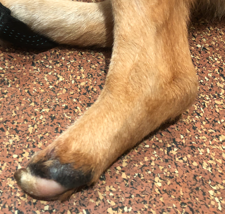
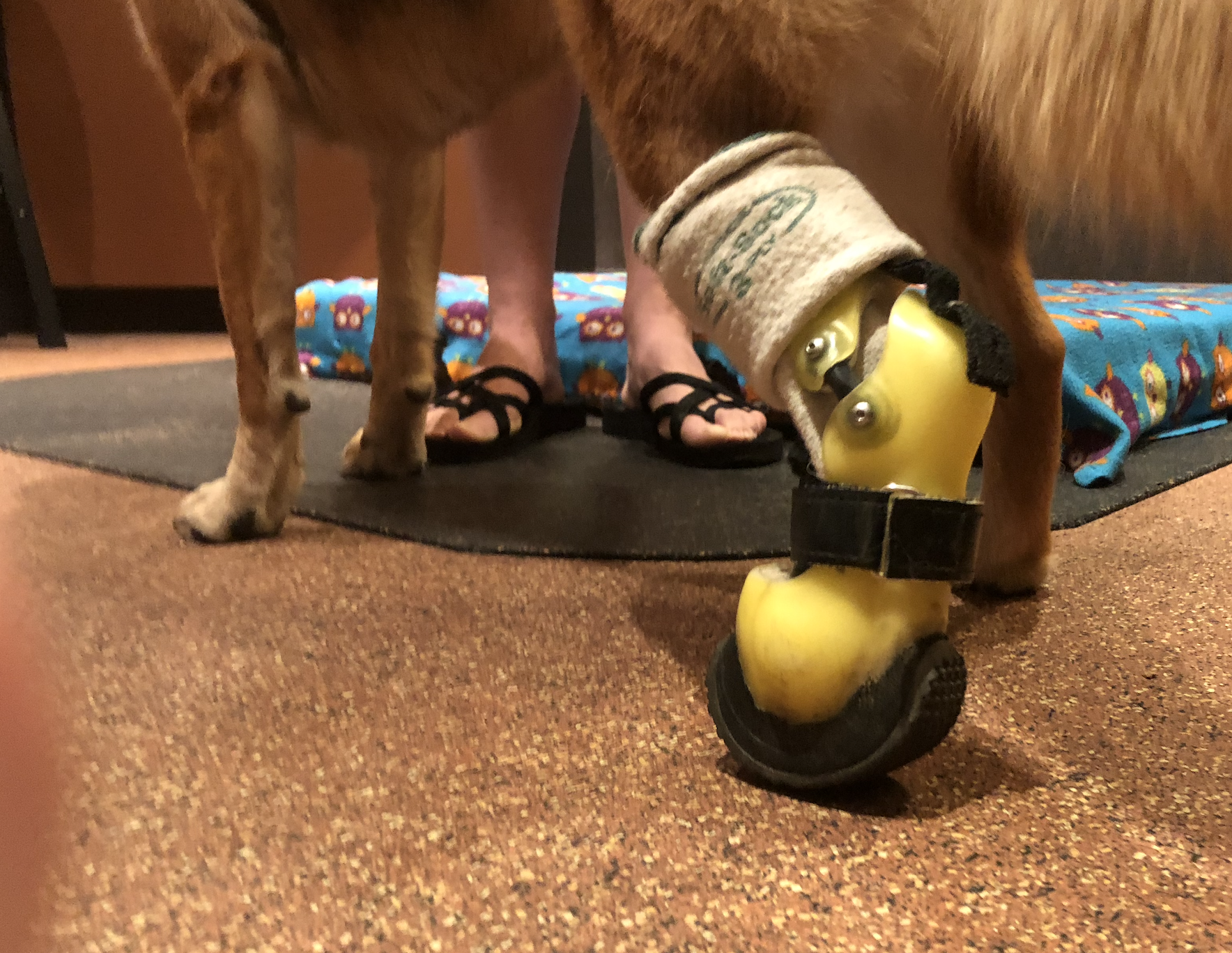
Custom exoprosthetics are externally worn prosthetic limbs that replace a missing portion of a dog’s leg following amputation or congenital limb absence. Unlike orthotics, which support an existing limb, exoprosthetics are designed to substitute for the missing limb segment and allow weight bearing through a prosthetic interface.
These devices are typically custom-made using molds or digital scans and are tailored to the dog’s anatomy, level of amputation, weight, and activity level.
When might a dog be considered for an exoprosthetic?
Exoprosthetics are most considered in dogs that:
- Have undergone partial limb amputation
- Were born with a limb deformity or absence
- Have a well-healed, pain-free residual limb
- Have good strength and function in the remaining limbs
- Are motivated, tolerant, and able to participate in rehabilitation
They may be particularly beneficial for dogs with forelimb amputations, where weight distribution is more challenging, or for dogs that develop secondary orthopedic issues from compensating on three legs.
What exoprosthetics can do well
When properly selected and fitted, exoprosthetics may:
- Improve balance and gait symmetry
- Reduce strain on remaining limbs
- Allow participation in longer walks or activities
- Improve posture and weight distribution
- Support long-term joint and spine health
For some dogs, the prosthetic becomes a functional extension of their body rather than an external device.
What exoprosthetics cannot do
It is important to have realistic expectations.
Exoprosthetics do not:
- Restore normal anatomy or sensation
- Guarantee full return to pre-injury performance
- Eliminate the need for rehabilitation
- Work well in every amputation level or body type
Not all dogs will accept or tolerate a prosthetic, and some may function better without one.
The importance of the residual limb
Success with exoprosthetics depends heavily on the health of the remaining limb segment. Key factors include:
- A well-healed surgical site
- No ongoing pain or infection
- Adequate soft tissue padding
- Stable skin without excessive scarring
- Appropriate amputation level
Poor residual limb health can lead to pressure sores, discomfort, and device failure.
Rehabilitation is essential
Exoprosthetics are not a “plug-and-play” solution. Structured rehabilitation is critical and typically includes:
- Gradual introduction and wear schedules
- Gait training and balance exercises
- Strengthening of core and remaining limbs
- Skin monitoring and device adjustments
- Ongoing reassessment of fit and function
Dogs often need weeks to months to fully adapt to a prosthetic limb.
Potential challenges and complications
Even with ideal planning, challenges can occur, including:
- Skin irritation or pressure sores
- Device rotation or slippage
- Changes in fit as muscle mass changes
- Owner time and maintenance demands
Close communication between the veterinarian, rehabilitation team, prosthetist, and family is essential for success.
Exoprosthetics vs three-legged mobility
Many dogs thrive as tripods and never require a prosthetic. Exoprosthetics should not be viewed as automatically superior. Instead, they are one option among several, and the decision should be individualized.
Some dogs move better without a prosthetic, while others experience less fatigue and strain with one. Regular reassessment helps guide long-term decisions.
Quality of life comes first
The goal of an exoprosthetic is improved quality of life. This includes comfort, confidence, engagement with the environment, and the ability to participate in daily activities without distress.
If a prosthetic does not clearly improve these factors, it may not be the right choice for that dog.
Take-home message
Custom exoprosthetics represent an exciting and growing area of veterinary rehabilitation. When carefully selected, properly fitted, and combined with structured rehabilitation, they can offer meaningful functional benefits for some dogs following limb loss.
They are not a universal solution, but they are a powerful option when used thoughtfully and with realistic expectations.
 drbrunke
Leave a comment