Cranial cruciate ligament (CCL) rupture is one of the most common orthopedic injuries in dogs. Surgical stabilization is widely considered the standard of care for most medium to large dogs, while non-surgical management may be appropriate in select cases. In recent years, custom knee braces have been increasingly marketed as an alternative or adjunct to surgery.
While the idea of a non-surgical solution is appealing, the current research supporting the use of braces for CCL tears in dogs remains limited and inconclusive.
Understanding the canine CCL injury
The cranial cruciate ligament stabilizes the canine stifle (knee) by preventing excessive forward movement and rotation of the tibia relative to the femur. When the ligament fails the joint becomes unstable. This is often due to a degenerative process rather than an acute injury causing the instability to lead to pain, abnormal motion, meniscal injury, and progressive osteoarthritis.
Effective treatment must address this instability, not just pain or inflammation.
What braces are designed to do
4
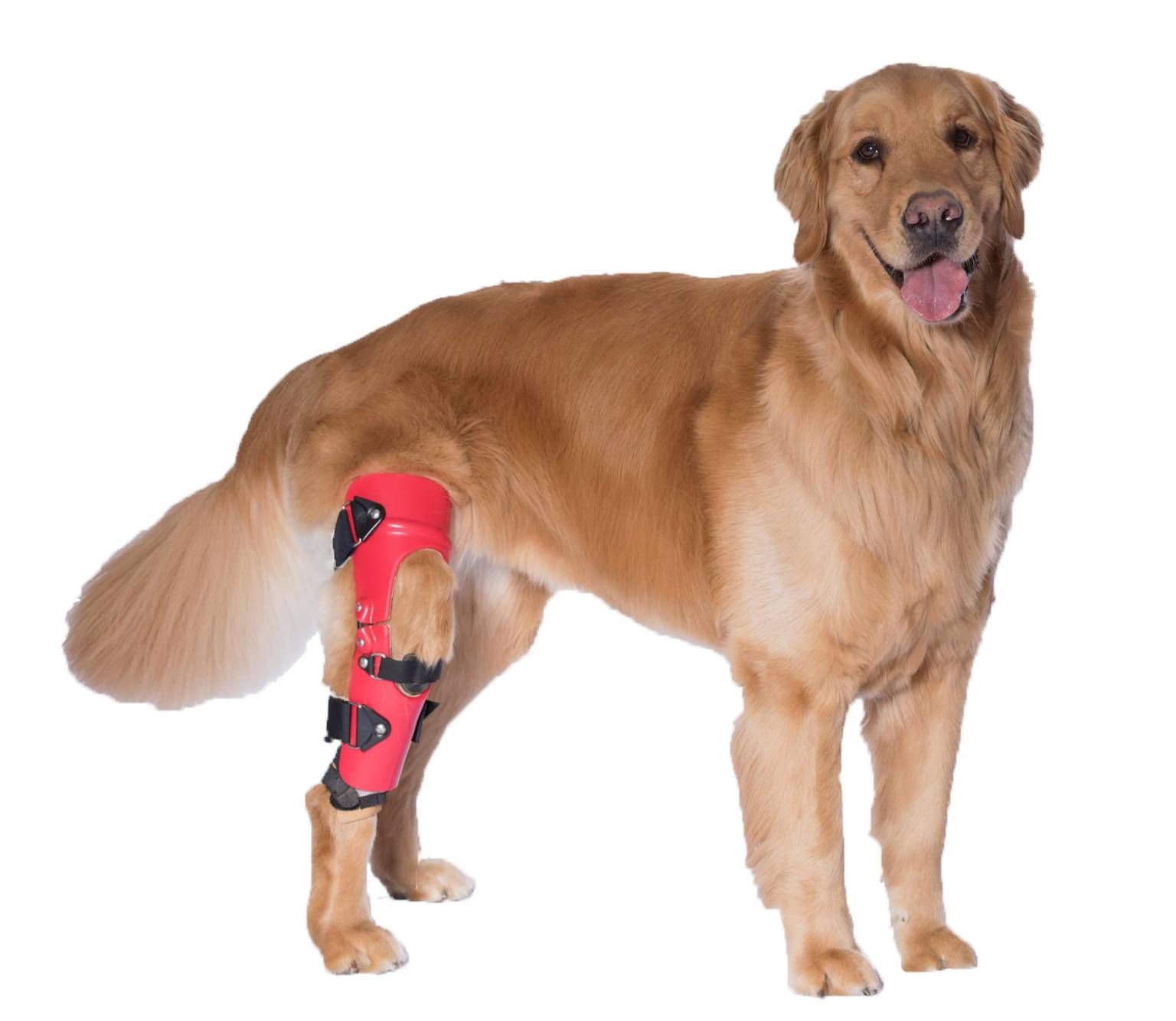
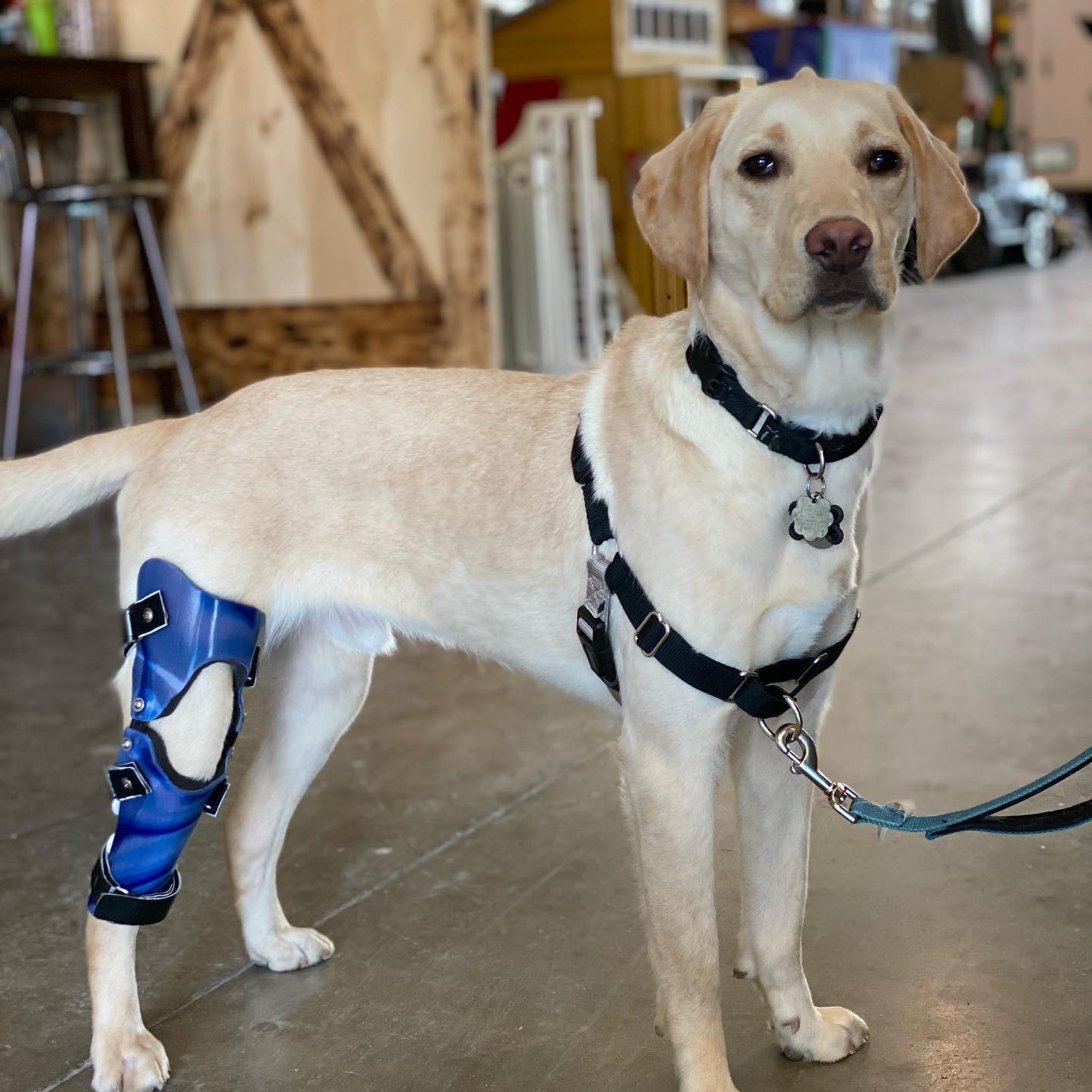
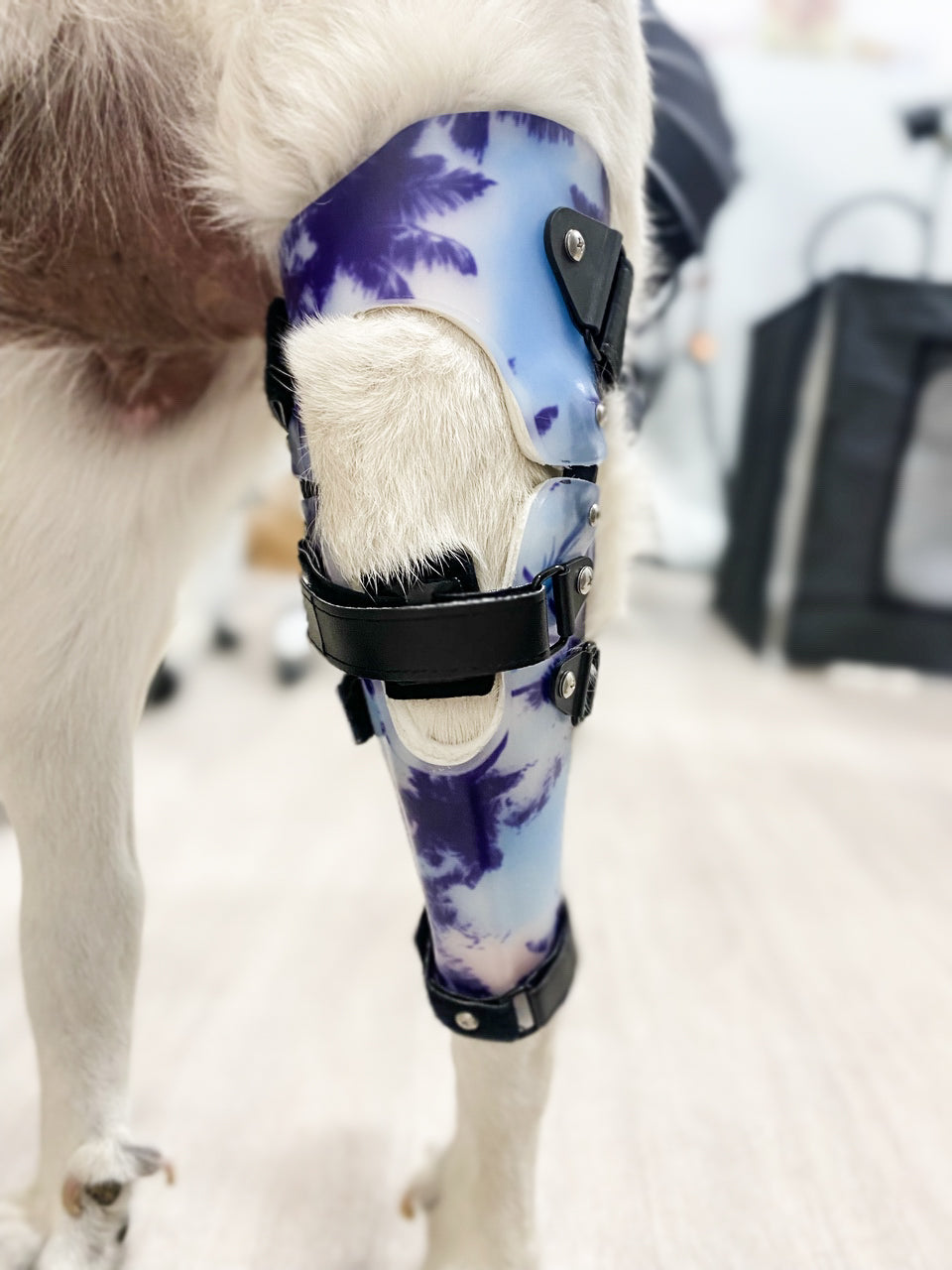
CCL braces are intended to provide external support to the stifle by limiting abnormal movement and reducing stress on the joint. In theory, this may decrease pain and improve function, particularly during weight-bearing activities.
However, external braces cannot fully replicate the complex stabilizing role of the cranial cruciate ligament or reliably control the internal forces acting within the stifle during normal gait.
What the research currently shows
Currently, there are:
- Very few prospective, controlled clinical studies evaluating CCL braces in dogs
- Small sample sizes and short follow-up periods
- Heavy reliance on owner-reported outcomes rather than objective gait analysis
- Significant variability in brace design, fit, and wear compliance
Most published reports are retrospective case series which limits the strength of their conclusions. There is little high-quality evidence demonstrating that braces restore stifle stability, prevent meniscal injury, or slow the progression of osteoarthritis in dogs with CCL disease.
Lack of evidence does not equal proof of failure, but it does mean that strong claims cannot be supported.
Biomechanical limitations
One major challenge with braces is biomechanics.
The canine stifle experiences complex forces during walking, trotting, and running, including rotation, shear, and compression. Because braces sit outside the body, they can shift, loosen, or rotate during movement. Even well-fitted braces may not consistently control tibial thrust or internal rotation, especially in active or larger dogs.
Additionally, skin irritation, pressure sores, and muscle atrophy can occur with prolonged brace use.
Concerns about disease progression
CCL rupture in dogs is usually a progressive, degenerative condition. Even if a brace temporarily improves comfort or function, it does not address the underlying joint pathology.
Without restoring stability, ongoing micro-instability may continue to damage cartilage and menisci, leading to worsening osteoarthritis over time. This raises concern that some dogs using braces alone may appear improved while the joint disease silently progresses.
Where braces may have a role
Despite limited research, braces may still have a place in carefully selected situations, such as:
- Dogs where surgery is not feasible
- Patients with significant medical comorbidities that increase surgical risk
- Short-term support during conservative management or rehabilitation
In these cases, braces should be considered a supportive or palliative tool, not a definitive treatment.
The importance of informed decision-making
Owners deserve clear, honest information about what is known and not known about braces for CCL disease. Marketing claims may suggest outcomes comparable to surgery, but those claims are not currently supported by strong scientific evidence.
Veterinarians play a critical role in helping families weigh expectations, costs, risks, and alternatives, while prioritizing the long-term welfare of the dog.
Take-home message
At present, the research supporting the use of braces as a primary treatment for cranial cruciate ligament tears in dogs is weak. The lack of high-quality evidence, combined with biomechanical limitations, means that braces should not be viewed as equivalent to surgical stabilization in most dogs.
Braces may offer short-term comfort or situational support, but they should be used cautiously, with realistic expectations and ongoing veterinary oversight.
Continued research, including controlled clinical trials and objective outcome measures, is needed before strong recommendations can be made.
 drbrunke
Leave a comment